
Client case study: NBFC
NBFC loan analytics on Apache Superset.
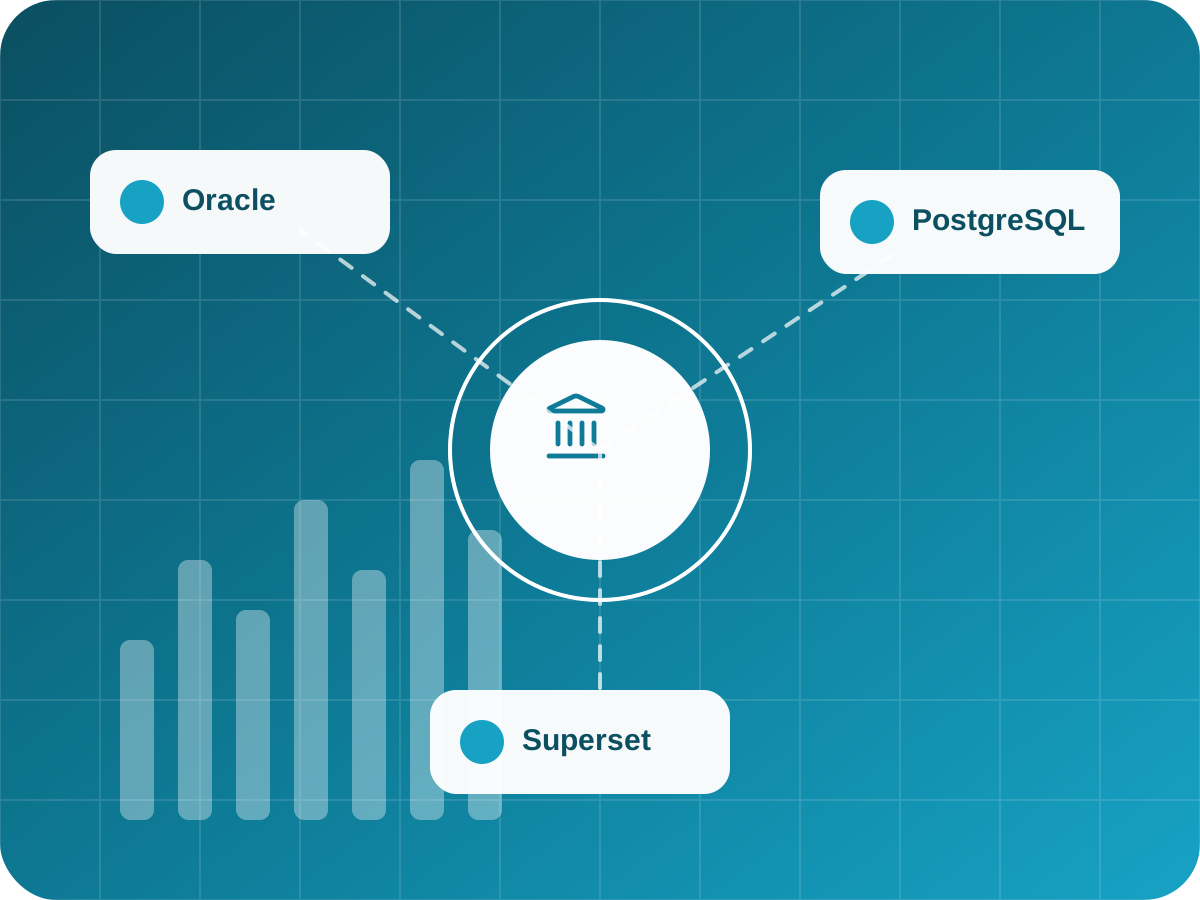
For a non-banking financial company, we built the reporting layer. Data moves from its Oracle lending database into a PostgreSQL reporting store. Apache Superset dashboards, embedded in the client's own application, show loans, outstanding balances and collections for each reporting period.
The client
A non-banking financial company (NBFC). Its name is withheld under a non-disclosure agreement.
Loan accounts, disbursements, repayment schedules and collections are recorded in an Oracle database. Lending teams, branch managers and management each need the same answers at different levels of detail.
The brief: reporting without loading the lending database
The client needed reports inside its own application, refreshed each period, and no extra load on the database that runs the lending operation.
A single outstanding report joins loan, schedule and receipt data. It buckets overdue amounts by days past due and rolls the totals up by branch and product. Running that against the live system can slow the daily work.
How the data flows
We separated reporting from the system of record. Each layer has one job.
| Layer | What it does | Who uses it |
|---|---|---|
| Oracle lending database | Holds the loan, schedule and receipt records. Read only for reporting. | Lending operations |
| Synthesis jobs | Scheduled reads from Oracle. Apply the business rules and days-past-due buckets. | Data team |
| PostgreSQL reporting store | Holds reporting tables shaped for Superset, apart from the lending system. | Superset |
| Superset datasets and metrics | Define each measure once, so every dashboard reports the same figure. | Analysts and managers |
| Embedded dashboards | Superset charts shown inside the client's application. | Branch and head office staff |
How the refresh works
Each run is driven by parameters, so a new period needs no new pipeline.
The reporting period and the as-of date are inputs to each run. The as-of date is the day the balances are measured. Days past due counts how many days a payment is late. Existing dashboards refresh for the new period, and the periodic reports come from the same data.
The reporting modules
Four modules sit on the same reporting store.
Loan module
Disbursement volumes, amounts, ticket sizes and product mix.
Outstanding module
Principal outstanding by days-past-due bucket, branch and product.
Collection module
Amounts due against amounts collected, with recovery by bucket.
Analytic reports
Portfolio analysis built on the same synthesised data.
What we delivered
The reporting layer, end to end, from the first read of the Oracle tables to the dashboards in the client's application.
Oracle extraction
Scheduled reads from the lending tables each report needs.
Synthesis layer
Joins, business rules, bucketing and aggregation to report grain.
PostgreSQL reporting store
Reporting tables kept apart from the lending system.
Superset datasets and metrics
Shared definitions, so every dashboard agrees.
Parameter-based refresh
Dashboards and periodic reports refreshed for each period.
Embedded dashboards
Superset inside the client's own application.
Before and after
The change is where reporting now happens: in its own store, on a schedule, and inside the application.
Before
Figures spread across many Oracle tables. Each report needed its own joins. Period-end figures were assembled for each review.
After
One reporting store. Metrics defined once and shared. Dashboards refreshed by period. New reports added as Superset charts.
Want plain-English answers? Try DashboardGPT
DashboardGPT is our AI analytics tool, built on managed Apache Superset 6.0. You ask a question in plain English. It answers with a chart and a short written insight.
Start the 15-day free trial. No credit card is needed. Or try the live demo with sample data.
Why not query the lending database directly?
Heavy reporting queries compete with the work the lending system does every day. A separate reporting store keeps report queries off the lending system.
How are the figures kept consistent across dashboards?
Each measure, such as outstanding principal, is defined once in Superset. Every dashboard that uses it reports the same number.
Can new reports be added later?
Yes. A new report is a new Superset chart on the existing reporting store. It does not need a new pipeline, unless it needs a new source table.
Does this replace our lending system?
No. The lending system stays the system of record. The reporting layer reads from it and never changes its records.
Reporting from a lending database?
Tell us where your loan, outstanding and collection data lives. We map the jobs, the reporting store and the dashboards it would take.